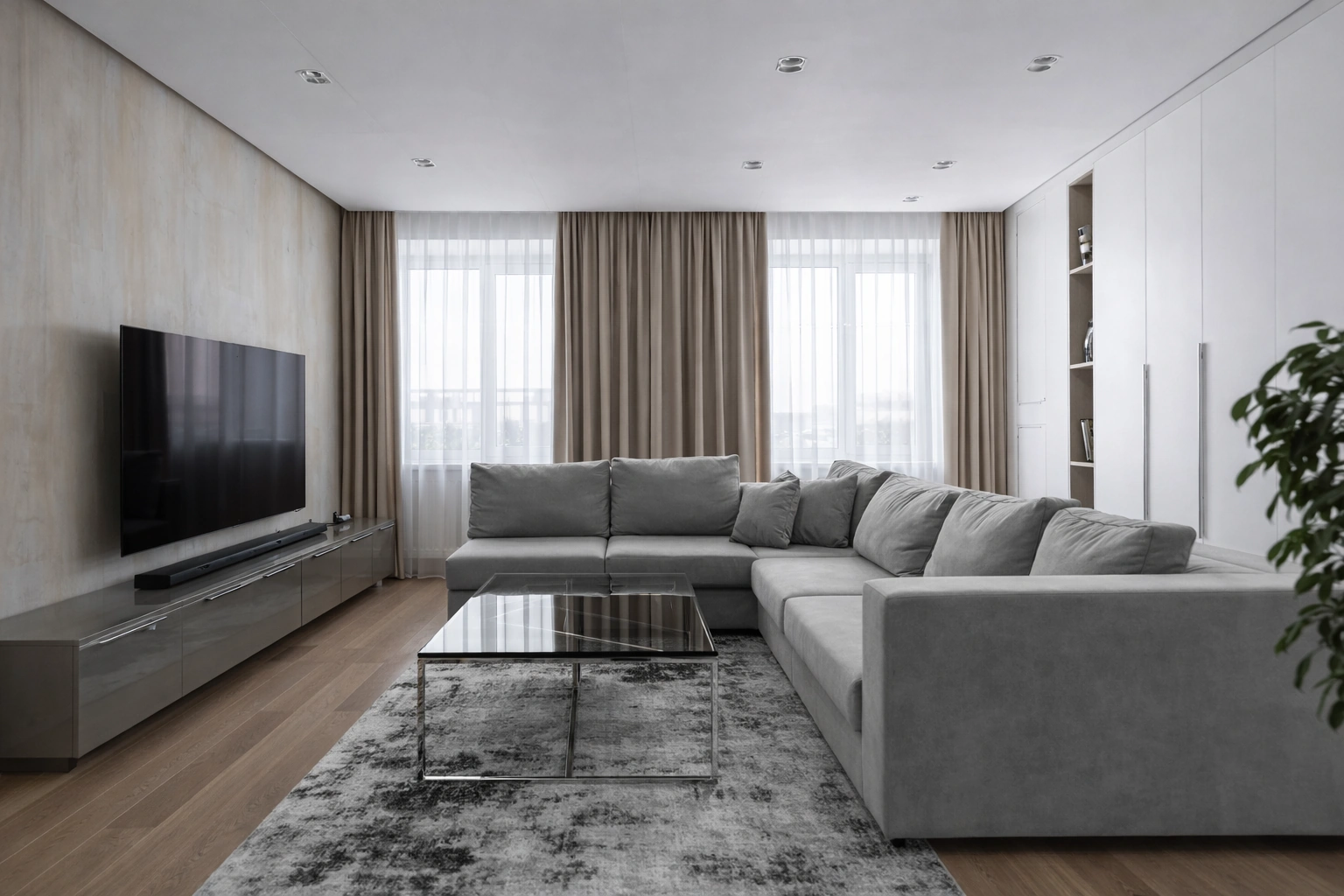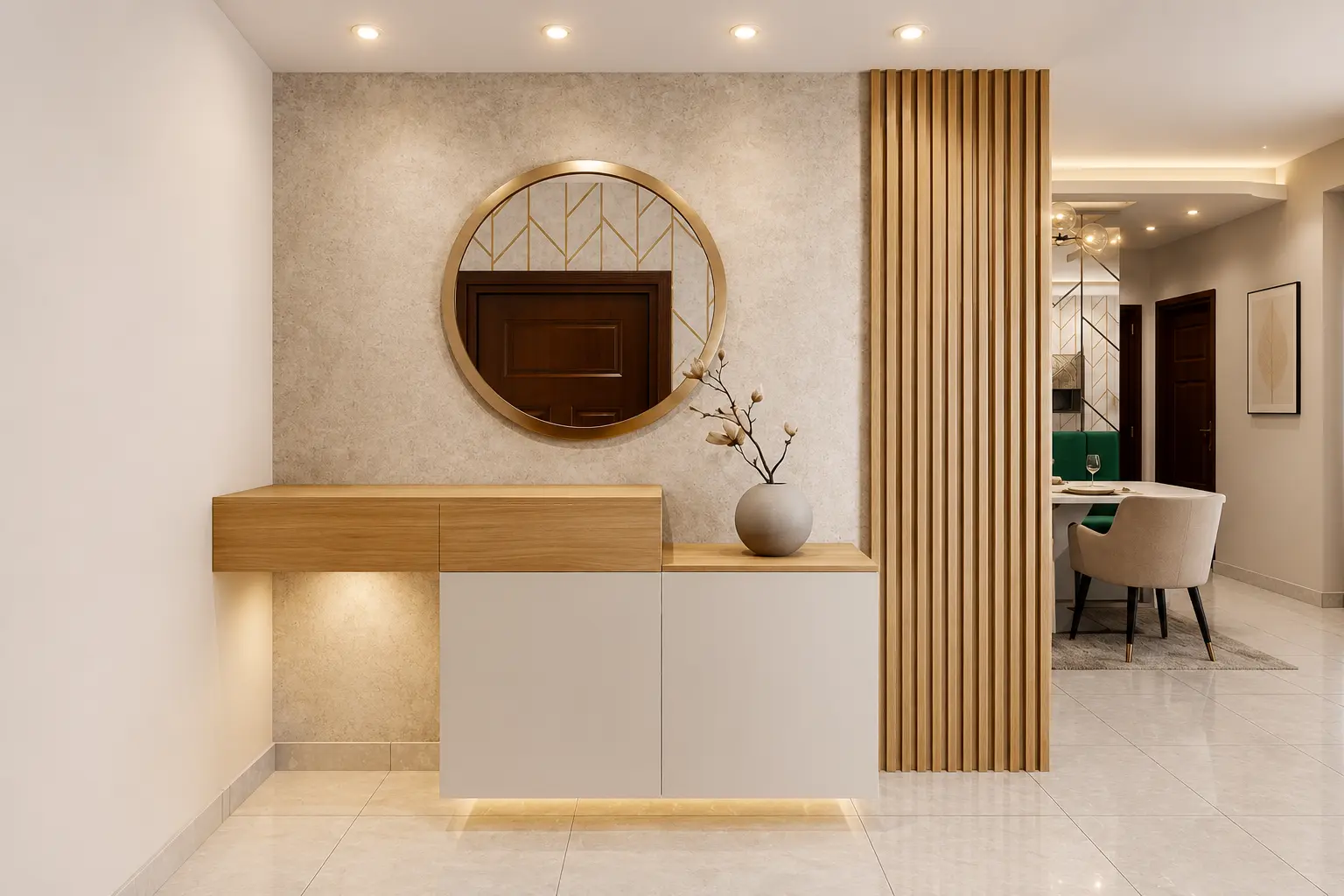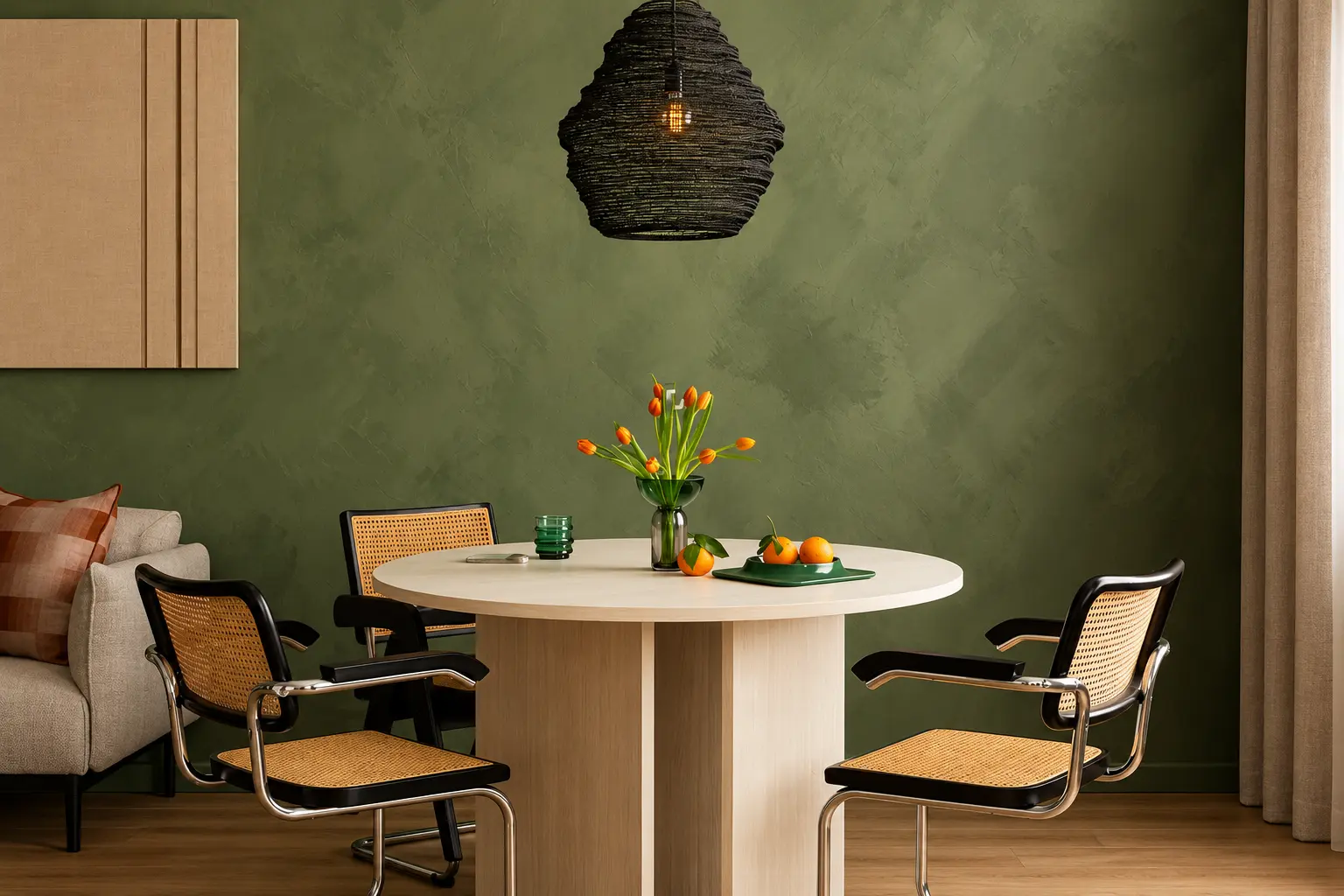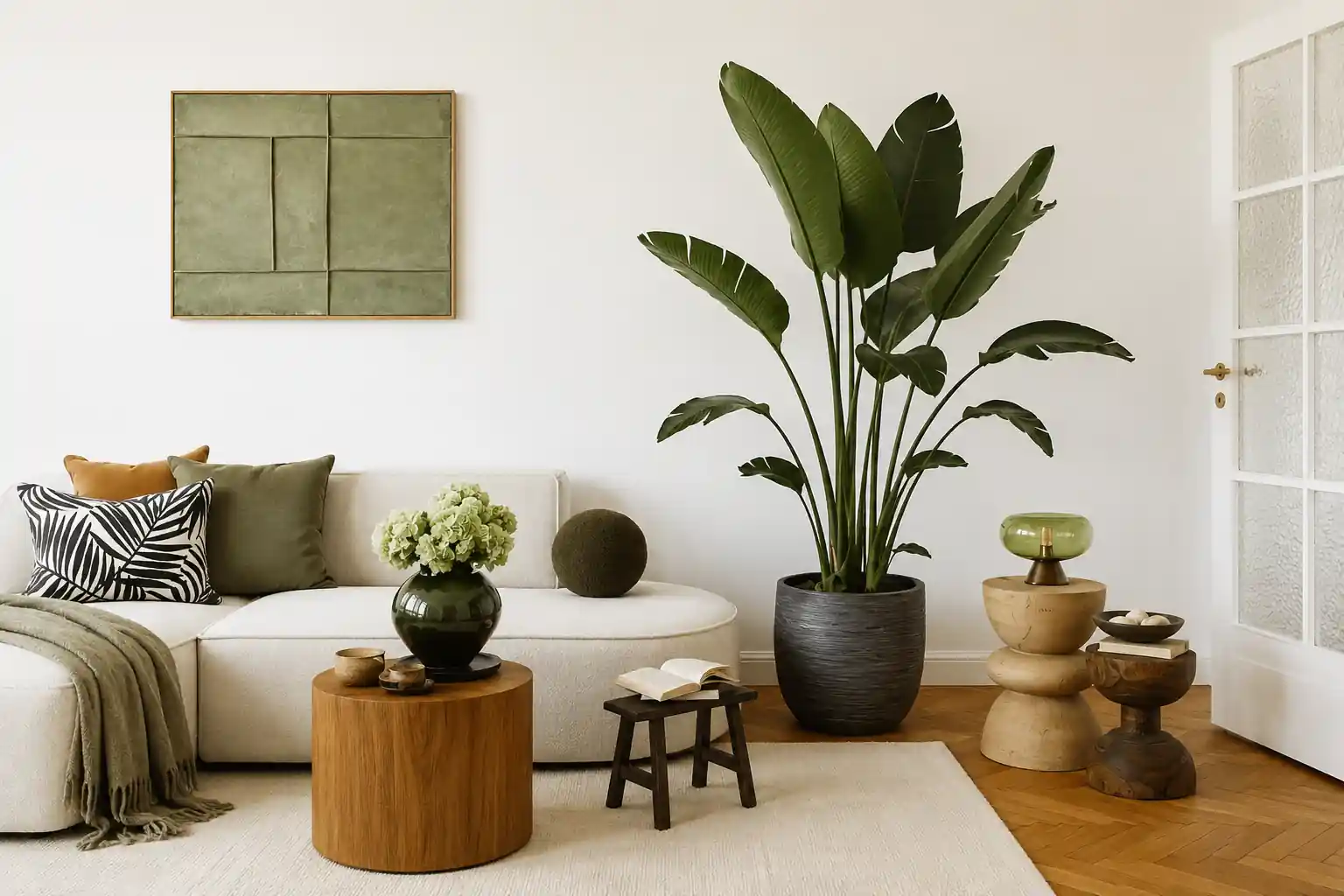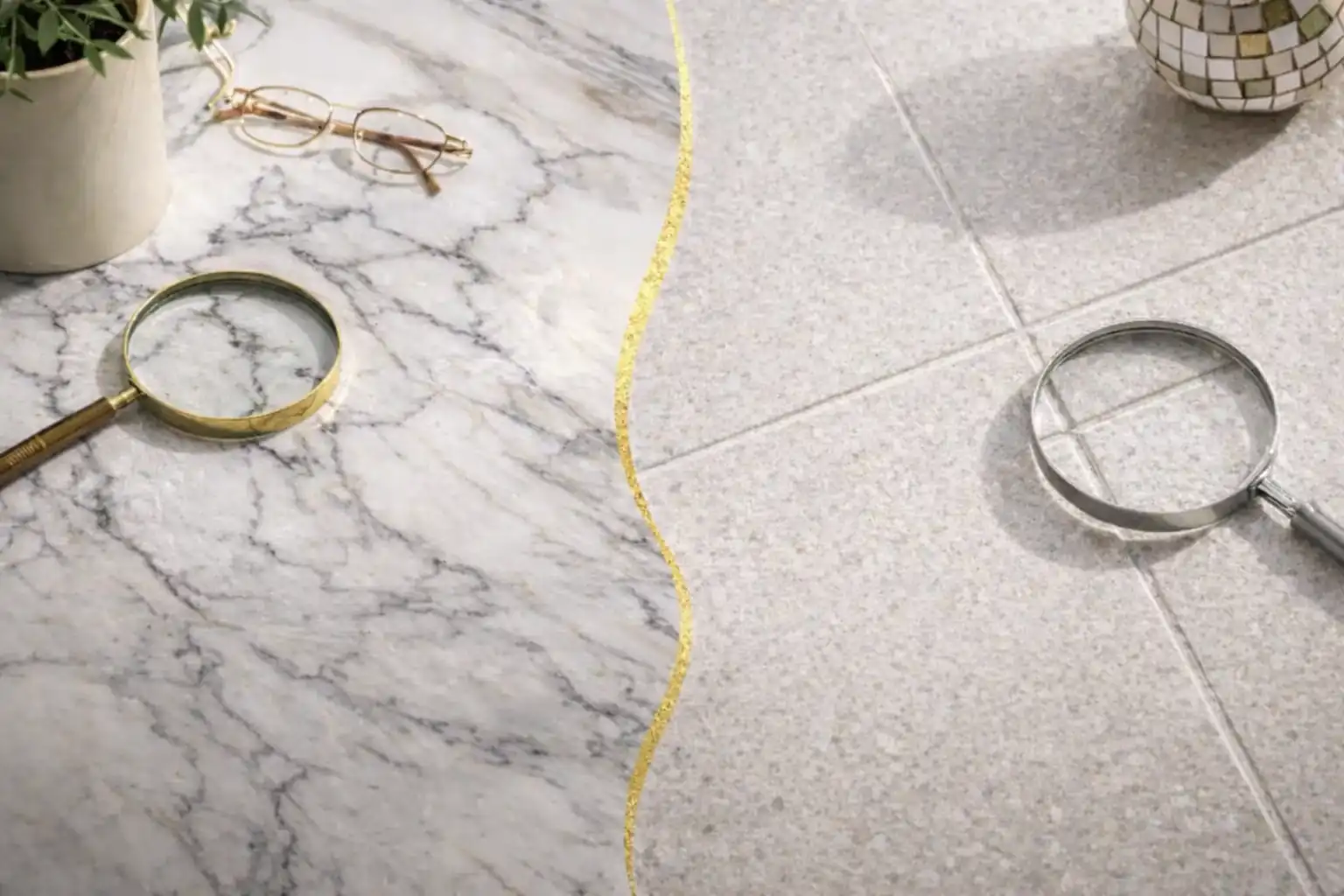
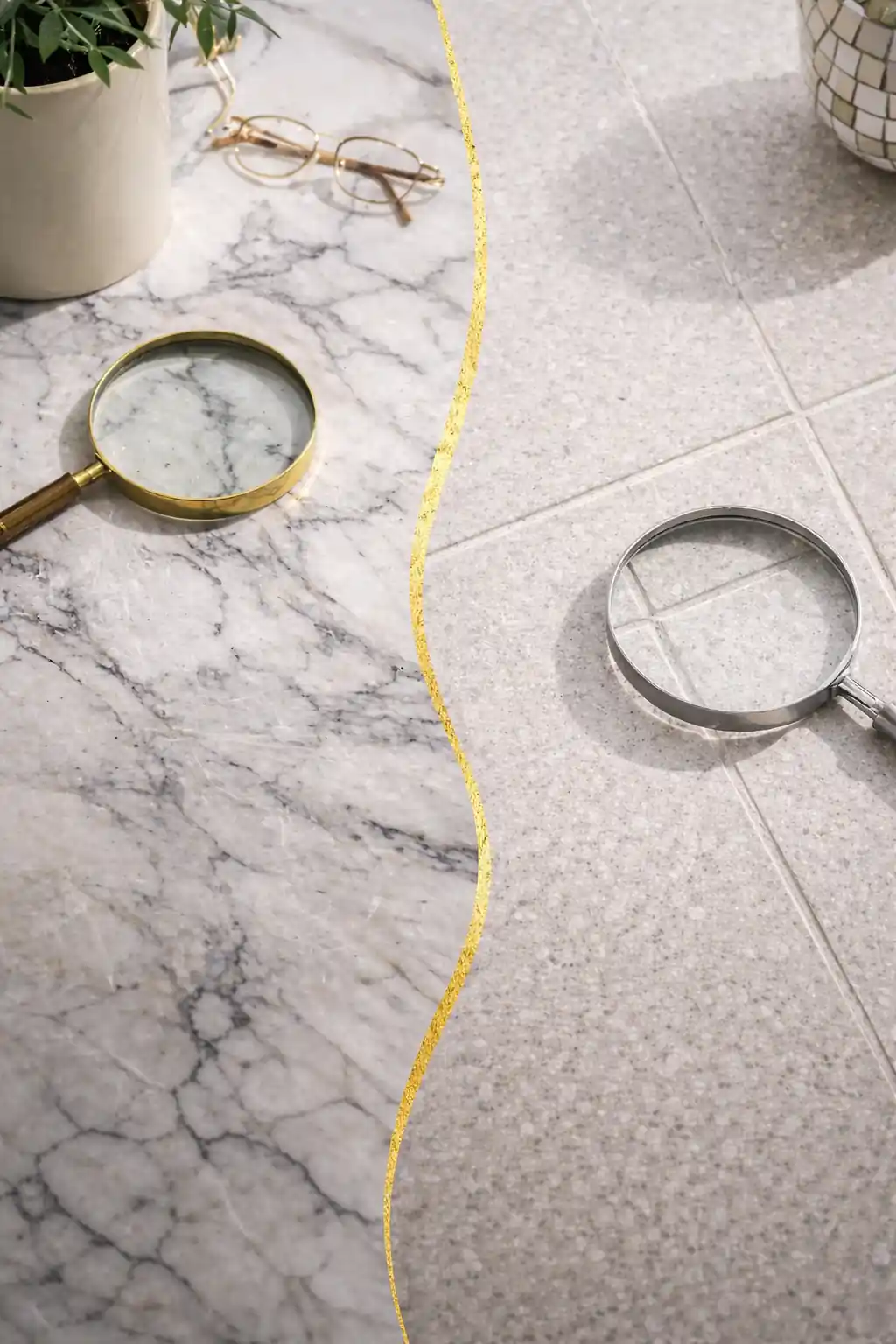



If you’re stuck in the classic marble vs tiles debate, you’re not alone. This decision feels high stakes because once the flooring is installed, there’s no easy undo button. And in Indian cities, where flooring covers a serious investment across living rooms, bedrooms, and even balconies, you don’t want to regret it six months in.
The difference between marble and tiles is not just about which one looks more premium. It’s about how you live. Do you host often? Do you have kids running around? Is there a pet corner that sees water spills daily? Does your home get harsh afternoon sun?
Let’s have a closer look at how to choose the right option for your home.
Understanding what the difference between marble and tiles is goes beyond comparing appearance and cost. There are key differences in the behaviour of the two materials that can impact how you clean, maintain, and live in your home over time.
The key difference between marble and tiles lies in their porosity. As a natural stone, marble is more porous, meaning it absorbs liquids unless properly sealed. In humid cities like Mumbai, where wet footwear enters the house frequently, this may not be ideal. This is why interior designers in Mumbai prefer tiles, especially vitrified tiles, that are far less porous. Tiles resist water absorption better and are especially useful in kitchens and bathrooms where moisture exposure is high.
Another primary difference between marble and tiles is how they age. As marble ages, it develops a soft layer of sheen called the patina due to natural wear and tear. However, if you entertain large gatherings at your house often, this ageing process can cause dull patches over time that require periodic polishing.
Modern tiles are engineered for consistency. They resist scratches better and don’t require polishing. For busy urban lifestyles, this low-maintenance factor is huge.
Polished marble can get slippery, especially when wet. In homes where balconies and entrances deal with rainwater regularly, this matters. On the other hand, tiles now come in anti-skid finishes that are safer for bathrooms, balconies, and even kitchens.
Marble stays cool. During warm Bangalore days in Jayanagar villas, this helps naturally regulate indoor temperature. In Mumbai, however, where humidity is high, cool flooring may not always translate to comfort without proper ventilation. Tiles also remain relatively cool, but their behaviour depends on the exact type and thickness.
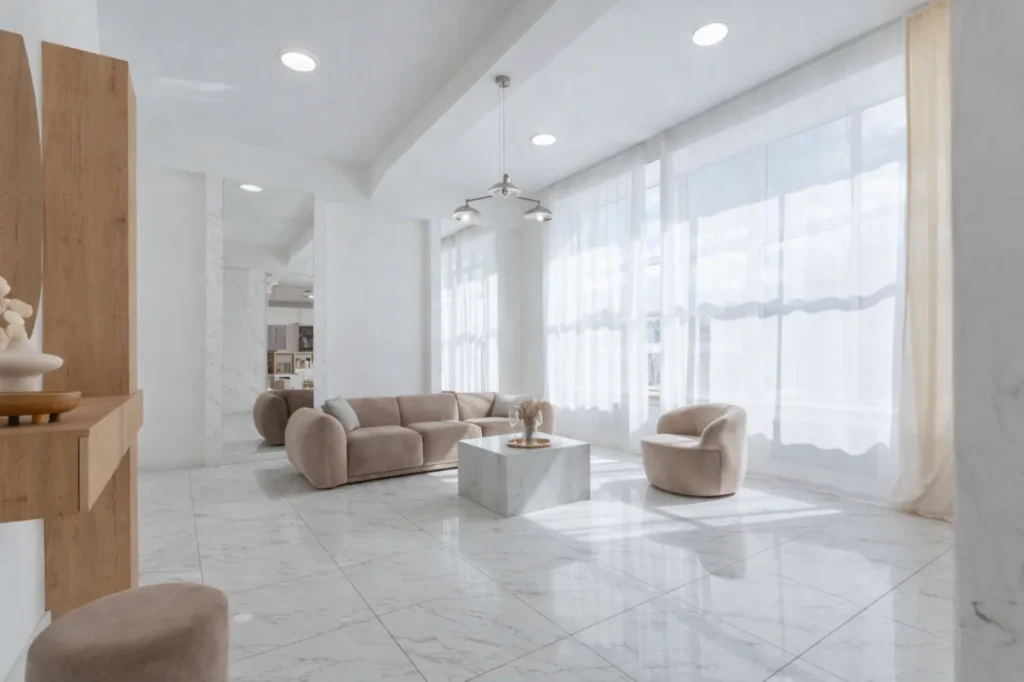
Marble is timeless. It works well in formal living room interior design, large entry foyers, prayer rooms, and homes where aesthetics are a priority over low maintenance. In spacious Bangalore homes with ample natural light, marble reflects light beautifully and adds depth.
But here’s the catch: Marble becomes high maintenance in kitchens with oil spills, bathrooms with soap residue, and compact apartments where polishing every few years becomes inconvenient. If your daily life includes kids spilling juice during breakfast or pets dragging in muddy paws during the monsoon, it’s worth opting for tiles instead.
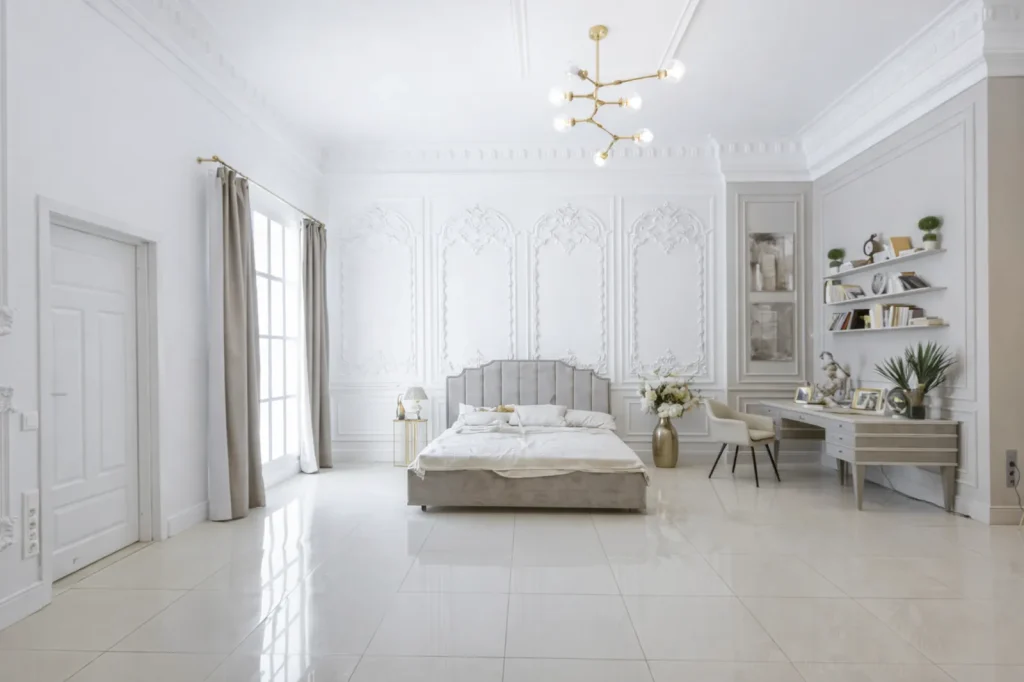
While there are several differences between marble and tiles, technological innovation has helped bridge this gap to a large extent. Large-format slabs mimic Italian marble almost perfectly. Texture depth has improved, grout lines have become thinner, and finishes range from matte to high gloss.
Understanding which is better between tiles or marble depends on how each material performs in your daily routine, from maintenance needs to wear over time. Tiles offer:
• Marble-look finishes without porosity issues
• Wood-look planks for warm aesthetics
• Anti-skid outdoor options
• Uniform colour consistency
In apartments with tight maintenance schedules and limited storage for heavy cleaning equipment, tiles offer ease.
Tiles and marble prices vary widely based on their type and quality. Natural marble often has a higher material cost along with additional expenses such as cutting and laying labour, polishing, and periodic maintenance.
The price difference in tiles vs marble isn’t just about the initial purchase. It’s about the lifecycle cost. Marble may need re-polishing every few years in high-traffic areas. Tiles generally don’t.
For homeowners working within structured budgets where real estate itself is expensive, tiles often provide better cost predictability. But don’t assume marble always costs more. Some imported tiles can match or exceed marble pricing. Again, function should lead.
When exploring the differences between marble and tiles, it’s important to factor in long-term maintenance, repair, and usability:
• Repairability: Marble can sometimes be re-polished to hide scratches. Tiles, if cracked, usually require complete replacement.
• Staining Risk: Marble demands sealing, without which staining can occur very easily. Tiles are more stain-resistant.
• Resale Value: Marble is still perceived as premium in certain buyer segments, especially in luxury Bangalore properties. However, modern large-format tiles in neutral tones also have strong appeal among urban buyers.
At Bonito Designs, the difference between marble and tiles isn’t approached as a catalogue choice, but rather as a lifestyle mapping exercise. With our LifeDesign philosophy that aims to design houses around your daily routines and lifestyle, flooring decisions start by understanding:
With in-house execution and ISO-certified quality checks, these decisions are carried through accurately on-site. Material transitions, edge detailing, skirting alignment, and finish continuity are planned to ensure the flooring performs well over time without uneven joints, visible gaps, or mismatched finishes.
Understanding the difference between marble and tiles comes down to how your home actually functions day to day. It’s not about choosing the more expensive option, but the one that fits your maintenance comfort, daily routine, and climate.
If you understand how your home is actually used, where spills happen, where kids study on the floor, where guests gather, you’ll find the answer. Once the function leads, the difference between marble and tiles becomes clear. That’s where Bonito Designs can help by translating these choices into a home that works seamlessly from day one.
Book a consultation to get started.